EYE EXAMS IN TORRINGTON, CT
Clearer vision starts with understanding your eyes.
Your vision is part of everything you do. At Torrington Eyecare, Dr. Erick Sirignano takes time to understand your concerns, examine your eyes, and explain what the findings mean for you. We welcome patients from Litchfield County and beyond.
Explore: What we check · Testing & dilation · When to book · Preparing · Costs & coverage · Questions
Time to listen. A plan you understand.
Whether you are updating your glasses, noticing a change, or returning for ongoing care, your questions belong in the conversation. We explain our findings, discuss the choices, and help you understand what happens next. When a change in treatment or prescription isn’t needed, you should hear that too.
What happens during a comprehensive eye exam?
The examination is tailored to your age, symptoms, history, and findings. It generally brings together several parts:
Your health & visual needs
We discuss symptoms, medications, medical and family history, and how you use your vision at work and home.
Vision & prescription
Vision testing and refraction help determine how clearly you see and whether your prescription needs to change.
How your eyes work together
Checks of eye movements, alignment, focusing, and pupil responses help assess visual function.
The front of your eyes
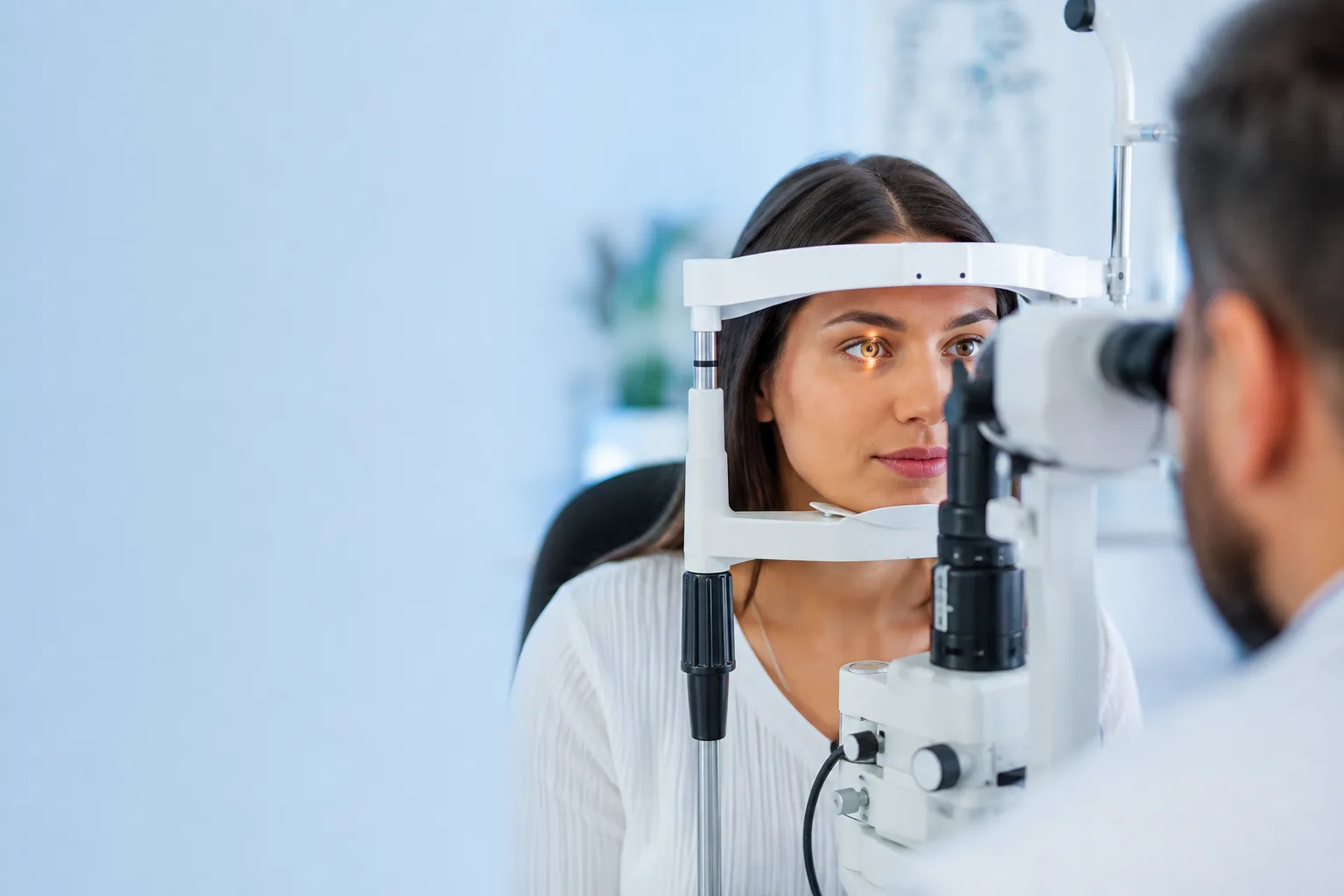
A slit lamp allows a close examination of structures such as the lids, cornea, and lens.
Eye pressure & internal health
Pressure measurements and examination of the retina and optic nerve help assess eye health. Dilation may be needed.
Findings & next steps
We review results and discuss treatment, further testing, referrals, or the next examination when appropriate.
A screening or an online prescription check does not provide the same assessment as a comprehensive eye examination.
Modern testing, chosen for a reason
Our practice has OCT, Optos retinal imaging with fundus autofluorescence capabilities, and visual field testing. Dr. Sirignano selects additional testing when it can help answer a clinical question or monitor a condition. Not every patient needs every test at every visit.
We explain why a test is recommended and how it contributes to your care. Technology supports the examination and conversation; it does not replace them.
Explore our diagnostic technology →
Will my eyes be dilated?
Dilating drops widen the pupils so the doctor can examine the inside of your eyes more thoroughly. Dilation can temporarily blur near vision and increase light sensitivity, often for several hours. Bring sunglasses and arrange a ride if you may not be comfortable driving. Do not drive until you can see safely.
Retinal photographs provide useful information, but they do not automatically replace dilation. The doctor will recommend the examination needed for your symptoms and findings.
When should you schedule an eye exam?
The right interval depends on your age, health, symptoms, family history, and any condition being monitored. Ask Dr. Sirignano when to return rather than relying only on when your benefits renew. Follow-up for medical eye conditions may be needed sooner than a routine examination.
Everyday vision changes
Difficulty reading, blur, or trouble with your current glasses are reasons to arrange an assessment. Let us know when the change began.
Children & families
Tell us about concerns with seeing at school, reading, or eye alignment. A school screening does not replace a full examination.
Ongoing medical eye care
Diabetes, glaucoma risk, cataracts, and other conditions may need a specific monitoring plan even when vision feels unchanged.
Some symptoms should not wait.
Sudden vision loss, severe eye pain, an eye injury, or new flashes, floaters, or a curtain across your vision need urgent attention. Call promptly rather than booking a routine checkup. If the office is unavailable, seek urgent eye care or an emergency department.
Preparing for your appointment
- Bring your current glasses, including reading or computer glasses.
- Bring contact lens packaging or your current contact lens prescription, if applicable.
- Have your medication list, allergies, and relevant medical history available.
- Bring both medical insurance and vision plan information.
- Write down your questions and any changes in vision, comfort, or daily activities.
- Bring sunglasses and plan transportation if dilation may affect your ability to drive.
Tell us when scheduling if you are interested in contact lenses, need a medical follow-up, or have new symptoms. That helps us arrange the appropriate visit. Ask the office how much time to allow, since dilation and additional testing can affect appointment length.
After the exam: your next step
Your plan may include continuing your current prescription, choosing new glasses, arranging a contact lens fitting, treating a condition, or returning for additional testing. We want you to understand the recommendation and feel comfortable asking us to explain it again.
When advanced care is needed, our relationships with cataract and glaucoma surgeons, corneal specialists, and retinal specialists help coordinate the next step.
Eye exam costs and insurance coverage
Costs depend on the appointment and services provided. Refraction, contact lens evaluation, or additional diagnostic testing may have separate charges. Ask our team about expected fees and what your benefits may cover before your visit.
Medical insurance and vision care plans serve different purposes. Billing follows the reason for care, documented findings, services provided, and applicable plan rules. Being a participating provider with an insurer does not mean we are in-network for every plan it offers.
Questions about which insurance applies?
Bring both insurance cards and give us a call. We’re happy to help you understand the next step.
Common eye exam questions
Do I need an exam if I can see well?
Yes, good vision alone does not rule out an eye condition. Some diseases develop without obvious early symptoms. Your doctor can recommend an appropriate examination schedule.
Is a contact lens fitting included?
Contact lenses require an additional evaluation and their own prescription. Tell us when booking so we can discuss the fitting, any beginner training, and associated fees.
Will I need new glasses after every exam?
Not necessarily. We discuss whether a prescription change would be useful and how your current glasses are working for you.
Can I drive after dilation?
Dilation can cause blur and light sensitivity. Arrange another driver if you may be affected, and do not drive until your vision is safe for driving.
What if the doctor finds an eye condition?
We explain the finding and discuss whether treatment, monitoring, further testing, or referral is appropriate. A finding does not always mean treatment is needed immediately.
How do I book the right appointment?
Call (860) 482-4439 and tell us the reason for your visit. Describe new symptoms when you call so the team can help determine the appropriate timing.
YOUR NEXT STEP
Let’s talk about your eye care.
Call our office to discuss your visit and find an appointment time.